Learning to dance is exciting, but finding the right amount of practice can be confusing. Some people believe practising every day is the fastest way to improve, while others prefer spending more time dancing in longer sessions once or twice a week.
Both approaches have advantages. However, the time you spend dancing is only one part of the learning process. How often you practise, what you focus on and whether you allow enough time for recovery can also influence your progress.
If you’re learning Salsa, Bachata or Ballroom dancing, understanding how different practice schedules work can help you make better use of your lessons.
The short answer: Short, regular practice sessions are often more useful for reviewing movements and developing consistency than concentrating all your practice into one long session. However, longer sessions provide valuable time for learning new techniques, receiving feedback and practising complete routines. A combination of both can be a practical approach for many beginners.
Why Does Practice Frequency Matter When Learning Dance?
Learning to dance involves more than remembering a sequence of steps. You also need to develop timing, coordination, balance and the ability to move comfortably with music.
These skills develop through repeated practice. When you return to a movement regularly, you have another opportunity to recall what you learned and improve how you perform it.
Motor-learning research supports distributed practice, where learning is revisited across separate sessions rather than concentrated into one extended period. This approach can support the retention and recall of previously learned skills.
Dance education research has also explored the importance of balancing practice with rest. However, there is no universally established daily practice schedule that works for every dance style or learner.
The ideal frequency depends on your experience, physical condition, learning goals and the difficulty of the movements.
What Are the Benefits of Short, Regular Dance Practice?
Short practice sessions can be particularly helpful when you’re learning basic movements or trying to remember recently introduced techniques.
1. Remembering Steps and Timing
Repeating familiar movements on different days gives you opportunities to recall them without relying entirely on your instructor’s guidance.
For example, reviewing a basic Salsa stepping pattern for a few minutes can help you become more familiar with its rhythm before your next lesson.
Over time, revisiting familiar movements can make it easier to recognise sequences and perform them with less hesitation.
2. Improving Movement Control
Focused repetition allows you to pay attention to individual details, such as posture, foot placement and weight transfer.
Rather than practising several combinations at once, you can concentrate on one movement and gradually improve its execution.
This is particularly useful when learning partner dances, where balance and controlled movement are important.
3. Building a Consistent Learning Habit
A short practice session may be easier to fit into a busy schedule than a lengthy workout.
Even 10–15 minutes can provide a useful opportunity to review familiar steps, practise timing or focus on one technique.
This is a practical suggestion, not a scientifically established minimum or ideal duration.
The important thing is to practise with attention rather than simply repeating movements without checking your technique.
When Are Longer Dance Practice Sessions More Useful?
Longer sessions also have a place in dance education, particularly when you need instruction, correction or time to explore more demanding movements.
1. Learning New Techniques
Some movements require explanation, demonstration and repeated correction.
A longer lesson may give you enough time to understand the technique, practise it with guidance and ask questions before attempting it independently.
This is particularly useful when learning unfamiliar footwork, turns or more complex movement patterns.
2. Practising Partner Coordination
Partner dancing involves communication, timing and responding to another person’s movements.
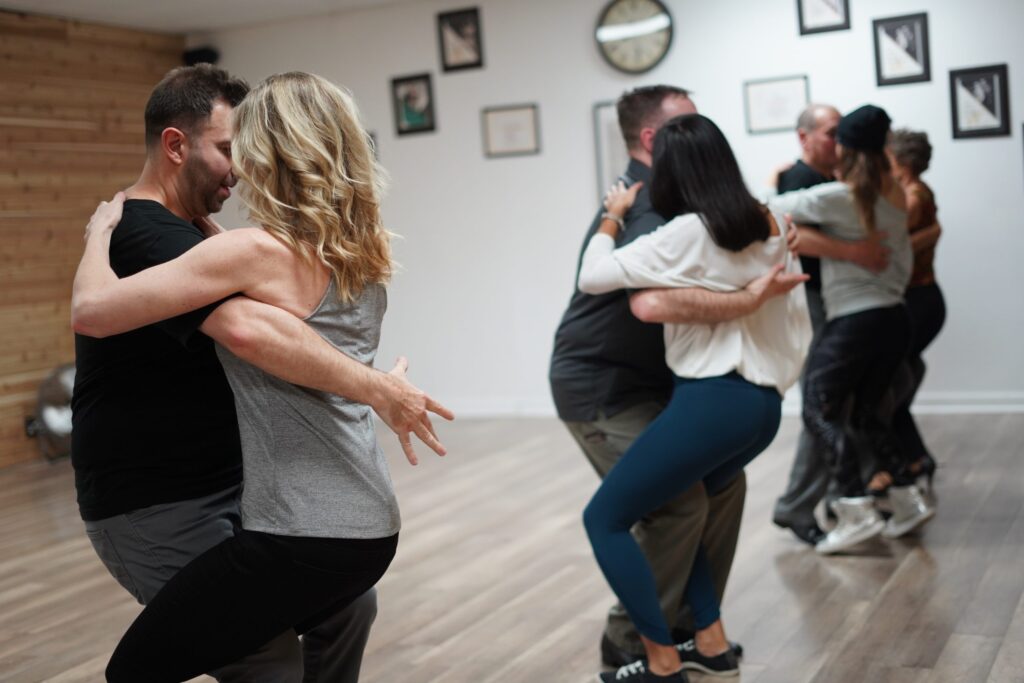
Practising with an instructor or partner can help you understand leading, following and connection in ways that solo repetition cannot fully reproduce.
Longer sessions can provide additional time to work on these skills and receive feedback.
3. Developing Complete Routines
When preparing for a performance, social event or competition, you may need time to connect several movements and practise transitions.
Longer sessions can be useful for working through complete routines, refining musical interpretation and identifying areas that need improvement.
However, they should include appropriate breaks. Continuing to practise when fatigue affects your concentration or technique may reduce the quality of the session.
Daily Dance Practice vs Longer Sessions: Which Helps You Improve Faster?
The main difference is how your learning time is distributed.
Short, frequent sessions provide repeated opportunities to review movements. Longer sessions offer more uninterrupted time for detailed instruction and extended practice.
Research generally supports distributing motor-skill practice rather than concentrating all practice into fewer sessions. However, there is no universal schedule proven to be best for every dance style or student.
Comparison at a Glance
Factor | Short, Regular Practice | Longer Practice Sessions |
Main purpose | Review and reinforce familiar movements | Learn and develop more complex movements |
Timing | Repeated practice across the week | More continuous practice time |
Footwork | Useful for reviewing basic steps | Useful for practising longer sequences |
Technique | Focus on one or two corrections | More time for instructor feedback |
Partner coordination | Short, focused exercises | Extended partner practice |
Choreography | Review individual sections | Connect complete routines |
Potential limitation | May not provide enough time for complex instruction | Fatigue may affect concentration and technique |
Neither approach is automatically better. Short sessions help you revisit familiar movements, while longer sessions provide time to learn, refine and connect techniques.
A balanced schedule can include both.
How Can You Balance Both Approaches?
For many beginners, combining structured lessons with shorter independent practice sessions is a sensible way to organise learning.
For example, you could attend one instructor-led lesson each week and use shorter sessions between lessons to review the movements covered.
You don’t need to practise for hours every day. The aim is to reinforce what you have learned while allowing enough time for your body and mind to recover.
What Could a Beginner’s Weekly Dance Practice Schedule Look Like?
If you’re attending one structured dance lesson each week, a manageable routine could look like this:
Day | Suggested Activity |
Monday | Review basic steps for 10–15 minutes |
Tuesday | Rest or light movement |
Wednesday | Practise timing and footwork for 10–15 minutes |
Thursday | Rest |
Friday | Attend a structured dance lesson |
Saturday | Review movements covered in the lesson |
Sunday | Rest or listen to music and review counts |
This is an illustrative schedule, not a prescribed training plan. Practice duration and frequency should be adjusted to your goals, fitness, recovery and instructor’s advice.
If you have less time available, you can reduce the number of independent practice sessions while maintaining a regular lesson schedule.
Why Instructor Feedback Still Matters
Practising independently can help you become familiar with movements, but it cannot always tell you whether you’re performing them correctly.
An instructor can identify problems with timing, posture, balance and technique that may go unnoticed during solo practice.
This is particularly important when learning partner dances such as Salsa, Bachata and Ballroom, where coordination and communication are part of the learning process.
For example, you may remember a Salsa combination correctly but still transfer your weight incorrectly. Similarly, you may understand a Ballroom sequence but need guidance with posture, frame or movement around the dance floor.
Regular practice works best when it reinforces the techniques introduced during structured lessons.
At Dance Studios Dubai, students can explore different dance programs designed for different experience levels, including introductory and more advanced training.
The studio also offers group and private instruction, allowing students to learn through guided lessons and focused practice.
Why Rest Is Part of Dance Practice
Rest is an important part of a sustainable learning routine.
Dancing repeatedly without allowing enough recovery can lead to physical fatigue, reduced concentration and difficulty maintaining good technique.
This is particularly relevant when practising demanding movements, turns or longer routines.
Rest doesn’t mean you must stop thinking about dance altogether. On days when you aren’t practising physically, you can listen to music, review counts or mentally recall a familiar sequence.
If you’re experiencing pain or unusual discomfort, avoid pushing through it and seek appropriate guidance.
The objective is to maintain consistency without treating every day as an intensive training day.
Frequently Asked Questions
1. Is Practising Dance Every Day Necessary for Beginners?
No. Beginners can make progress through regular lessons and consistent practice without dancing every day. A manageable routine that includes rest is often more sustainable than forcing yourself to practise daily.
2. Is 15 Minutes of Dance Practice Enough?
Fifteen minutes can be useful for reviewing familiar steps, improving timing or focusing on one technique. However, learning complex movements may require more instruction and practice. The appropriate duration depends on your goals.
3. Can Longer Dance Sessions Make You Learn Faster?
Longer sessions provide additional time for instruction and repetition, but they do not automatically produce faster learning. Fatigue and reduced concentration can affect practice quality, making breaks and recovery important.
4. How Many Days a Week Should a Beginner Practise Dancing?
There is no fixed number of practice days that suits everyone. Beginners can start with a manageable routine that includes regular lessons, short independent practice sessions and sufficient recovery. The right frequency depends on their goals, available time and physical condition.
5. Should You Practise Dance on Rest Days?
Rest days do not always require complete inactivity. Gentle movement or listening to music may be appropriate, depending on your condition. However, demanding practice should be avoided when your body needs recovery.
6. Is It Better to Practise Dancing Alone or With a Partner?
Both have benefits. Practising alone can help you review footwork, timing and individual movements. Partner practice is important for developing leading, following, coordination and connection. A combination of both can support your learning.
7. How Often Should Beginners Attend Professional Dance Lessons?
The ideal frequency depends on your experience, goals, availability and the dance style you’re learning. Regular structured lessons provide opportunities to receive feedback, correct mistakes and build on previously learned techniques. Your instructor can help you determine a suitable schedule.
Build a Dance Practice Routine That Works for You
Improving your dancing isn’t simply about spending more hours on the dance floor. It’s about combining structured lessons, focused practice and enough time for recovery.
Whether you’re learning Salsa, Bachata or Ballroom, developing a consistent routine can help you reinforce familiar movements, work on new techniques and gradually become more comfortable with music and partner coordination.
At Dance Studios Dubai, you can explore different dance styles and learning programs suited to your experience and interests.
Explore our dance programs and find a class to begin your dance journey.
Start with a manageable routine, practise with purpose and allow your skills to develop at a pace that works for you.